What an AI-Enabled Website Actually Feels Like
Not a chatbot bolted onto a homepage. A site structured so marketing can ask questions, draft content, and ship work with real website context.
An AI-enabled website is not a widget. It is a site designed so people and agents can work with it.
That usually shows up in Slack first. Someone asks how many posts are live, which five are overdue for an update, or whether the homepage hero still matches enterprise messaging. The answer comes from the actual site, not a guess.
That is the difference between “we added AI” and “our website is structured for AI work.”
Why chatbot-on-a-homepage is not enough
A chat bubble can answer FAQs. It cannot fix a content model that is messy, a CMS that requires engineering for every change, or a site that has no reliable interface for tools and agents.
Marketing teams do not need more tickets. They need autonomy with guardrails: structured content, workflows that do not wait on engineering for every edit, and an AI layer that can draft, summarize, and route work without inventing facts.
That is also why “AI features” sold as add-ons often disappoint. The model can only work with what the site exposes. If pages are unstructured, ownership is unclear, and integrations are brittle, the assistant will sound confident and still be wrong.
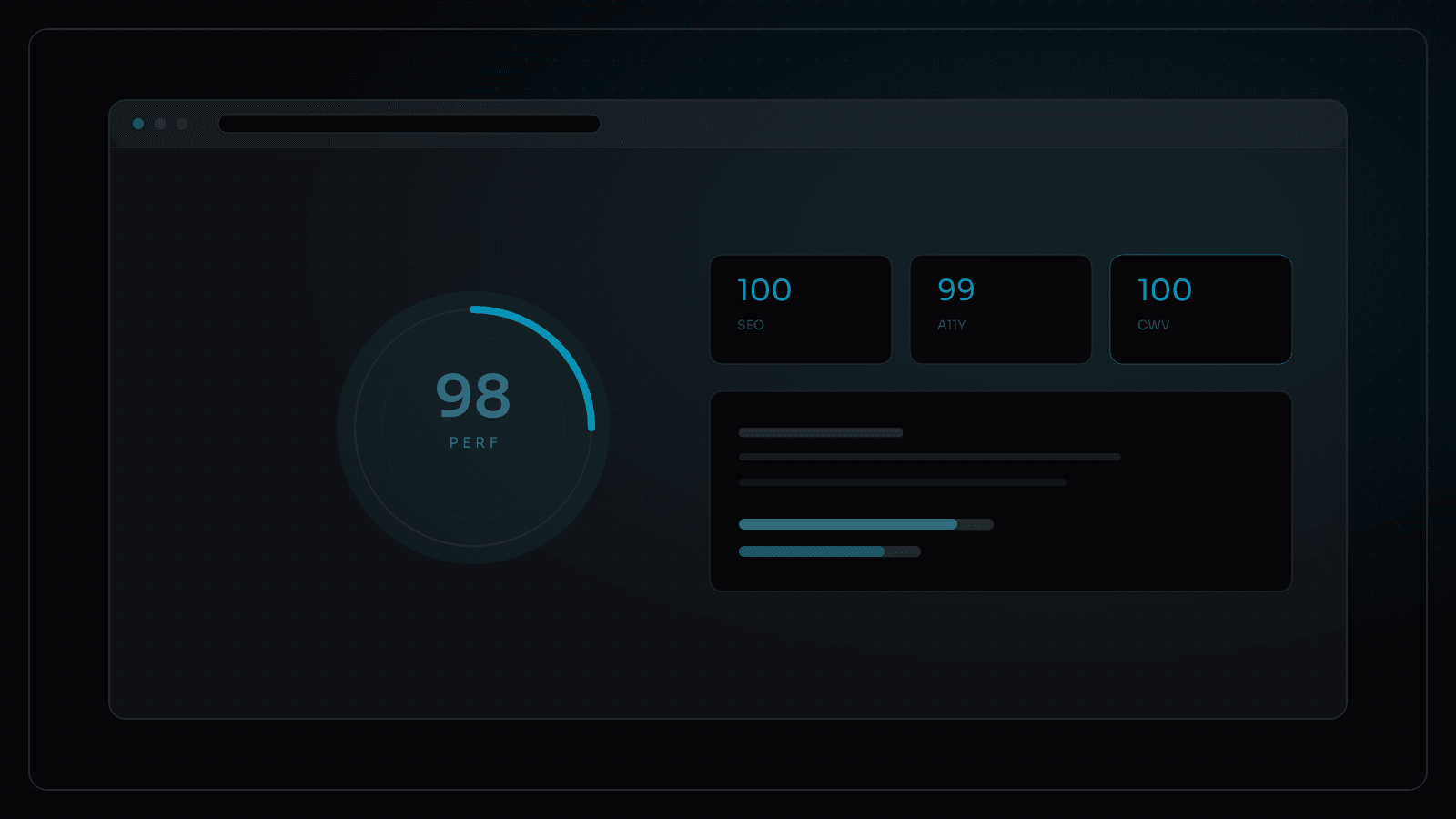
Performance still matters. Conversion still matters. The AI piece sits on top of a site that is already fast and intentional. If the foundation is weak, AI only amplifies the mess.
What an AI-enabled website feels like day to day
In practice, the shift shows up in small moments that used to create friction:
- A content lead asks which pillar pages are stale and gets a list with last-updated dates and traffic context
- Someone drafts three post outlines against live categories, tone, and existing coverage instead of starting from a blank doc
- A campaign owner checks whether a landing page still matches the offer in HubSpot before the launch email goes out
- Leadership asks a plain-language question about site performance and gets an answer grounded in real pages, not a generic dashboard screenshot
None of that requires the buyer-facing experience to become a science project. Visitors still get a fast, clear site. The AI layer helps the team operate the site behind the scenes.
What has to be true underneath
An AI-enabled website is only as good as the structure underneath it. That usually means:
- High-performance foundations your buyers feel immediately
- Editorial systems marketing can operate day to day
- Clear content models so agents are not guessing what a “page,” “post,” or “offer” is
- AI workflows connected to real site context
- Integrations that keep CRM, analytics, and Slack in the loop
If your site is only a destination, AI will stay shallow. If your site is structured for work, AI becomes a teammate.
How this connects to the rest of the stack
AI-enabled websites get stronger when reporting, lead gen, and an MCP interface sit nearby. The same site context that helps someone draft content can also power custom analytics, native conversion flows, and Slack-operable actions.
You do not have to build every layer at once. Start by making the website something the team can trust and operate. Then let the workflows grow from there.
If you are evaluating vendors or internal builds, a useful test is simple: can marketing ask a real operational question about the site and get a grounded answer without opening five tools? If not, the site is not AI-enabled yet. It is only AI-adjacent.